Solana's Quiet Rise and Future Potential in Crypto Markets in 2026
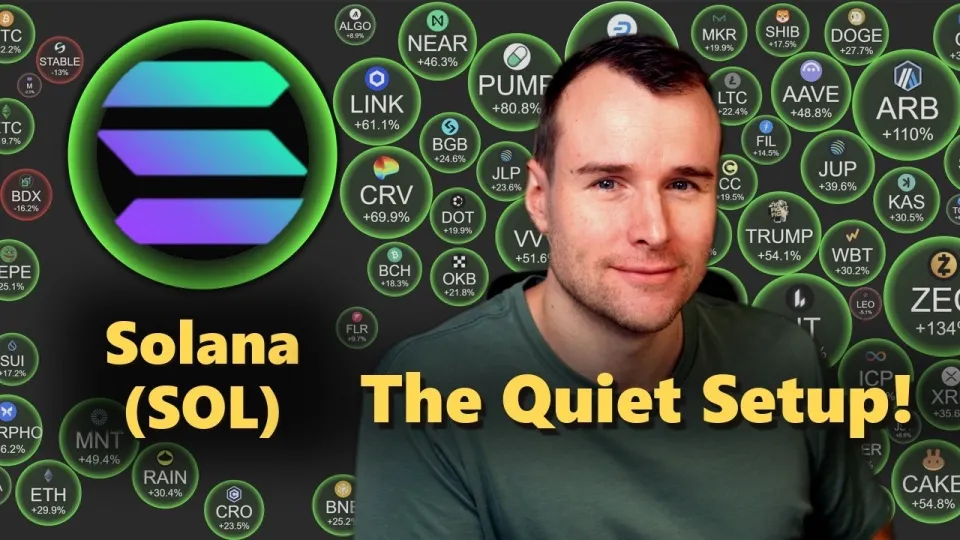
Video: 🚀 Solana Is Quietly Winning - SOL Crypto Analysis
Want articles like this for your own video to promote it on YouTube and Google? Order them through the Telegram bot @sat_sit_bot. Articles with your video embedded are written and posted by the bot itself — on popular topical sites (no ads). Free trial — 50 articles.
Solana has been quietly gaining ground in the cryptocurrency market throughout 2026, distinguishing itself with low fees, fast transactions, and promising technical upgrades. Its value proposition is strengthened by reduced inflation and a growing ecosystem, making it a compelling alternative to Ethereum for investors and developers alike. For those interested in exploring Solana further, the Bitcoin Strategy's automatic copy trading platform offers a bonus and registration opportunity.
Solana vs Ethereum in Speed and Fees
Solana's primary appeal lies in its ability to process transactions at a much faster rate and lower cost than Ethereum. While Ethereum remains the leader in decentralization and security, Solana's throughput often exceeds tens of thousands of transactions per second with fees that typically remain below a fraction of a cent. This advantage has attracted decentralized applications and users seeking efficient alternatives. However, Ethereum still holds more extensive developer support and a larger ecosystem, although Solana's ongoing upgrades aim to close this gap.
Network Upgrades and the Firedancer Project
One of Solana's most anticipated developments in 2026 is the Firedancer upgrade, designed to improve network scalability and resilience. Firedancer is a collaborative effort to optimize validators' software, increasing throughput and reducing resource consumption. This upgrade is expected to solidify Solana's position as a high-performance blockchain capable of supporting demanding decentralized finance (DeFi) and Web3 applications.
Solana's Fee Structure and Inflation Dynamics
Since the summer, Solana's transaction fees have remained consistently low, which is a significant factor for user adoption. Additionally, the network's inflation rate has decreased, easing concerns about token dilution. Although Solana remains inflationary, the reduced rate contributes to better tokenomics and aligns with the ecosystem's growth strategy. This balance between inflation and network utility is critical for long-term value retention.
Institutional Interest and Solana ETFs
Another sign of Solana's quiet success is the growing interest from institutional investors and the increasing inflows into Solana ETFs. These funds provide easier access for traditional investors seeking exposure to SOL tokens without managing the complexities of direct cryptocurrency ownership. The inflows into Solana ETFs indicate confidence in the project's fundamentals and its potential for growth in the broader crypto market.
Common Questions About Solana's Future
Many investors wonder if Solana can surpass Ethereum or if its inflationary nature poses a risk. While Solana has advantages in speed and fees, Ethereum's strong developer base and decentralization remain key strengths. The inflation rate is a concern but is trending downwards, which may mitigate long-term risks. Additionally, the impact of new projects like Alpenglow and BSOL tokens are watched closely by the community as possible catalysts.
Useful Links
- Automatic Copy Trading and Bonus: https://the-bitcoin-strategy.com/r/gOETmjod
- Trading Chart Software: https://the-bitcoin-strategy.com/tradingview
- Hardware Wallet Recommendations: https://the-bitcoin-strategy.com/ledger
Conclusion
Solana is quietly winning in 2026 by offering a unique combination of low fees, high speed, and ongoing technical improvements like the Firedancer upgrade. While Ethereum maintains certain advantages, Solana's evolving ecosystem and decreasing inflation rate make it a strong contender in the crypto space. Institutional interest through ETFs and the vibrant community further support its growth prospects. This analysis is based on insights from the Bitcoin Strategy channel, a reliable source for regular Solana updates and crypto market analysis. For those looking to engage with Solana, consider checking out the Bitcoin Strategy's trading platform.
Key takeaways
- Solana offers some of the lowest fees among major blockchains in 2026
- Firedancer upgrade aims to enhance Solana's scalability and network performance
- Solana inflation rate has decreased, improving tokenomics
- Ethereum still leads in decentralization but Solana narrows the gap in speed and cost
- Solana ETFs and institutional inflows are increasing investor interest
Questions & answers
Is Solana's inflation a significant problem for investors?
While Solana remains inflationary, its inflation rate has decreased recently, improving tokenomics. This reduction helps mitigate concerns about token dilution, but investors should monitor inflation trends as part of their risk assessment.
How does Solana compare to Ethereum in terms of transaction fees and speed?
Solana offers much lower transaction fees and faster processing speeds than Ethereum, making it attractive for users and developers seeking efficiency. However, Ethereum still leads in decentralization and developer support.
What impact will the Firedancer upgrade have on Solana's network?
The Firedancer upgrade aims to enhance network scalability and performance by optimizing validator software, which will increase throughput and reduce resource consumption, strengthening Solana's capacity to support large-scale decentralized applications.
Are institutional investors showing interest in Solana?
Yes, institutional interest is growing, evidenced by increasing inflows into Solana ETFs. These funds provide easier access for traditional investors and reflect growing confidence in Solana's potential within the crypto market.
Source: 🚀 Solana Is Quietly Winning - SOL Crypto Analysis · Markdown version